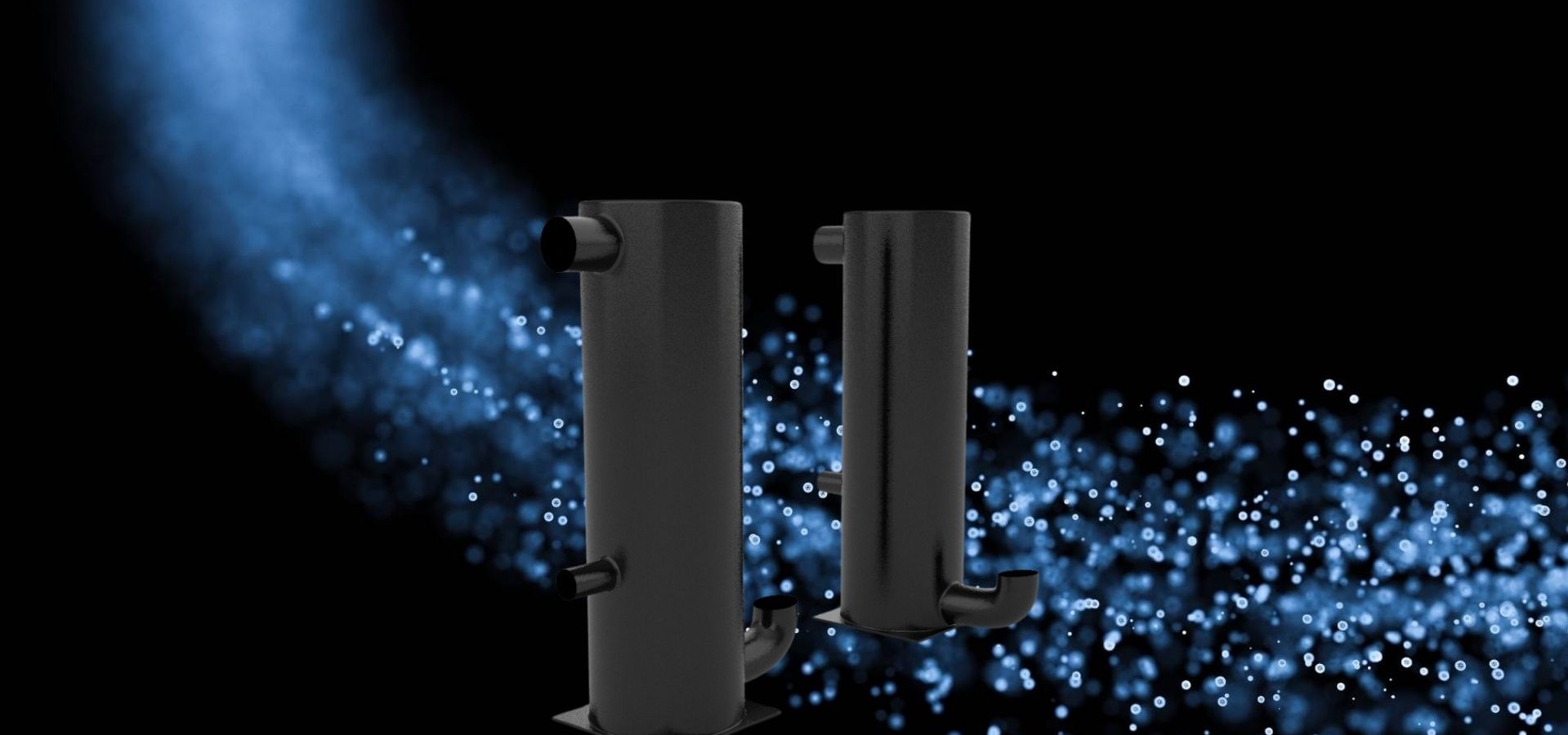
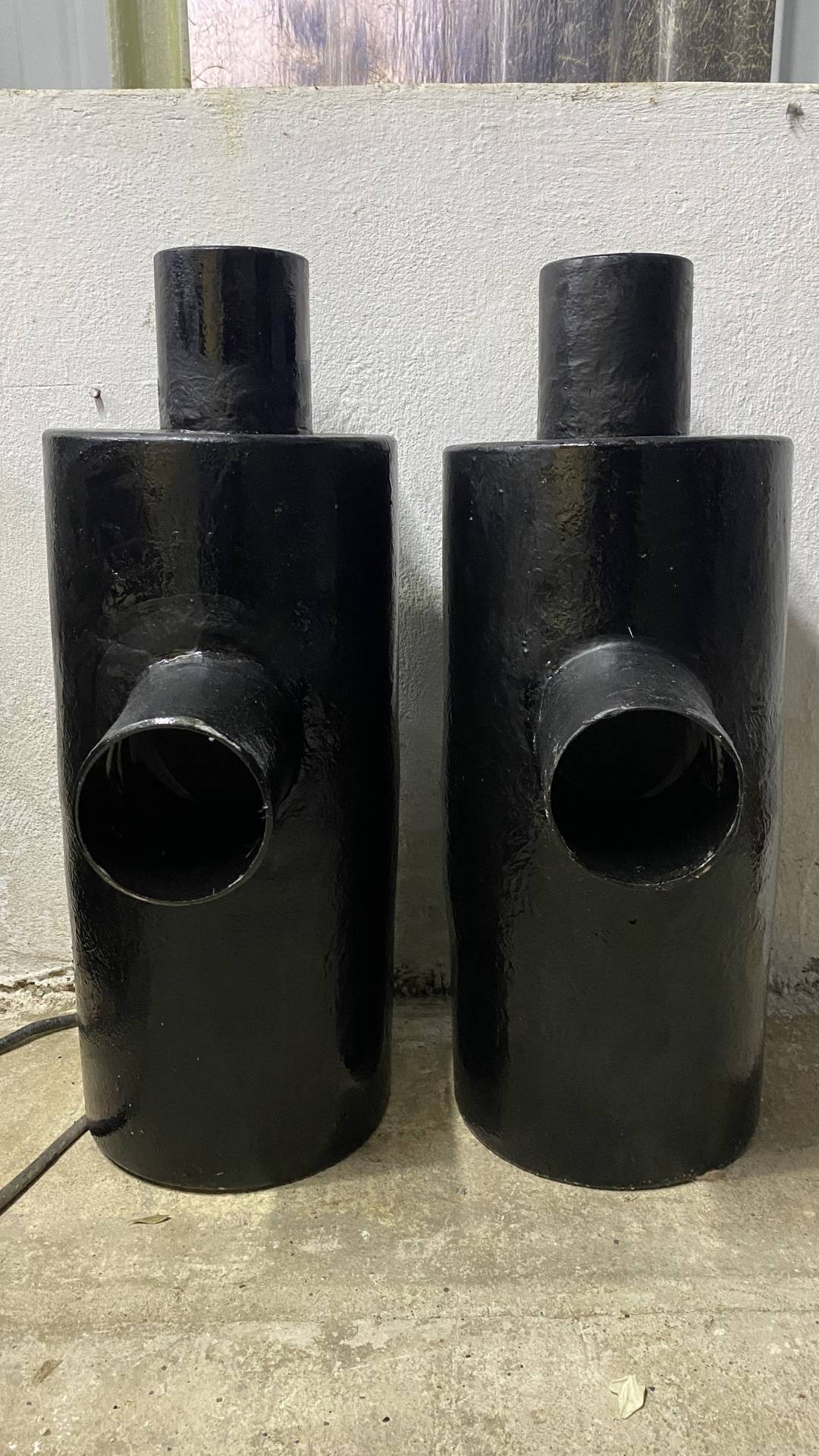
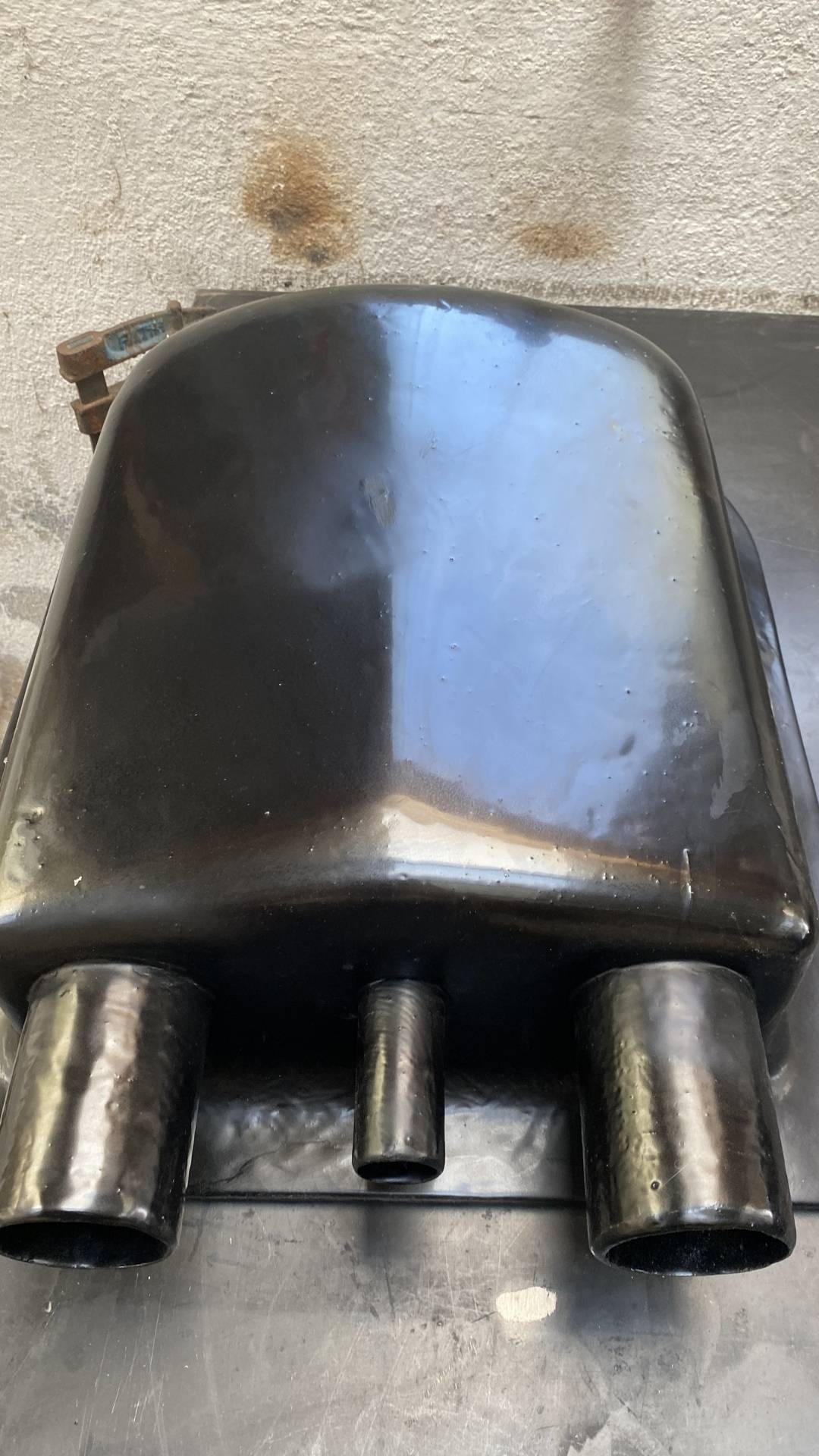
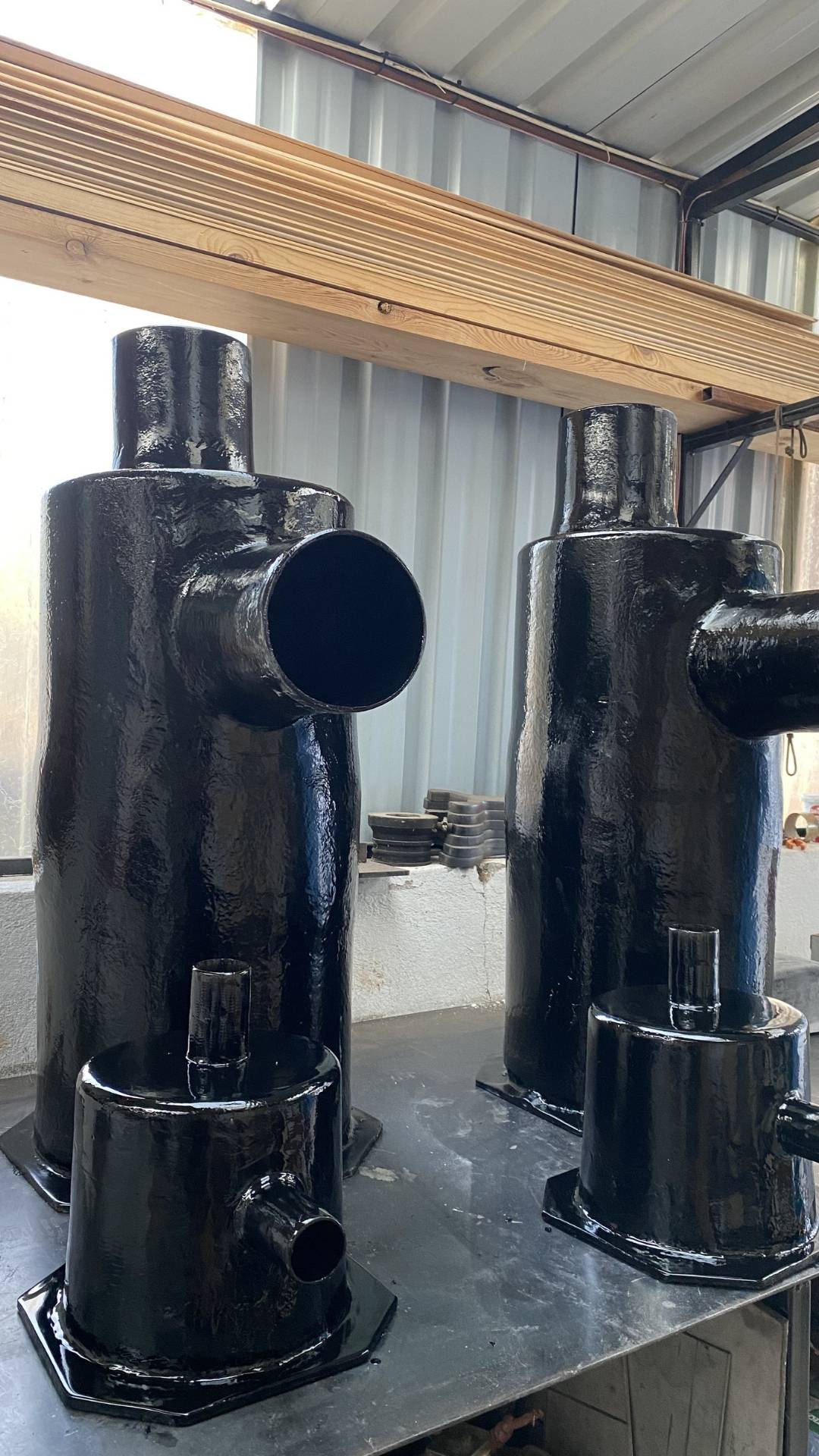
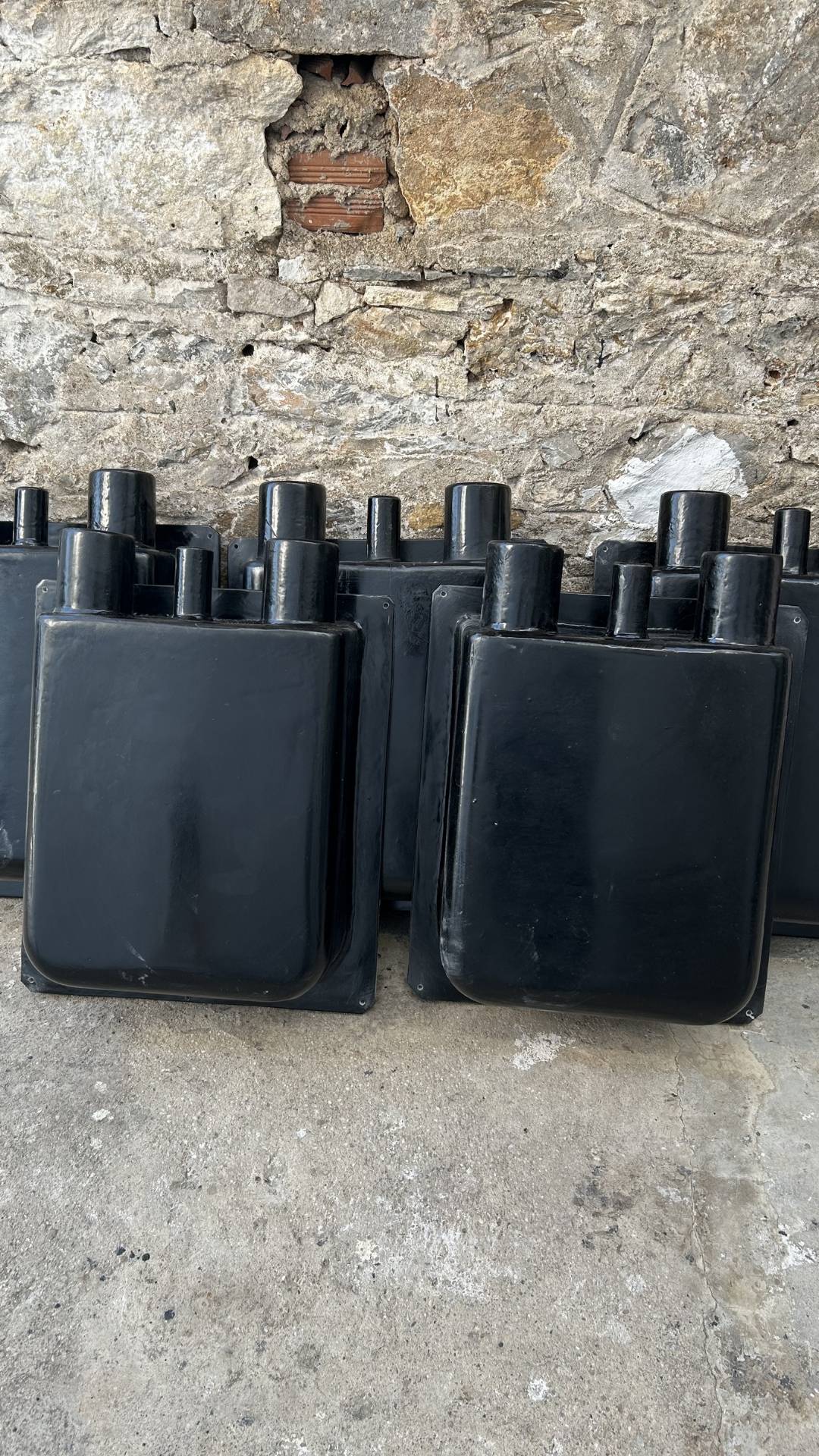
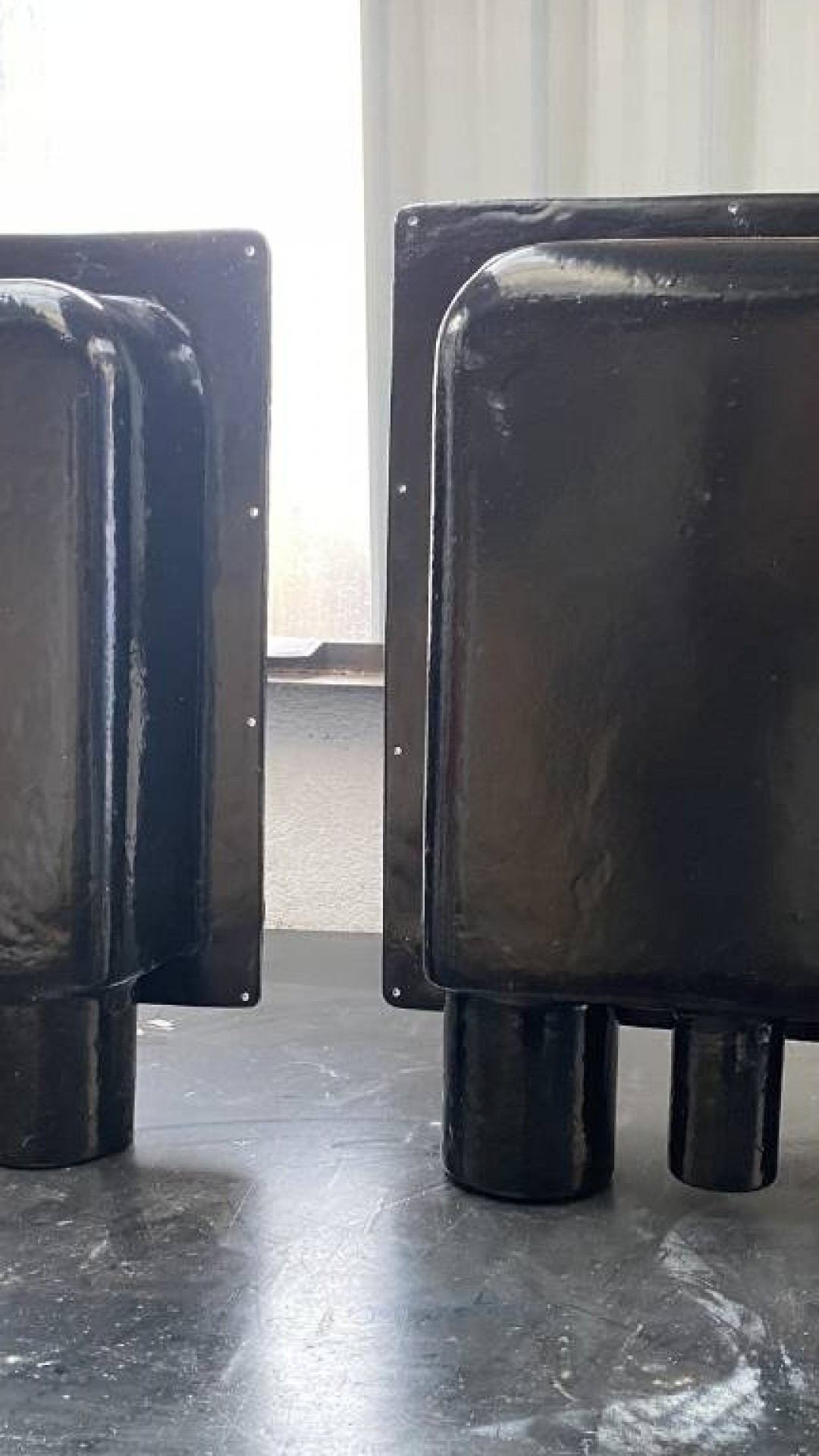
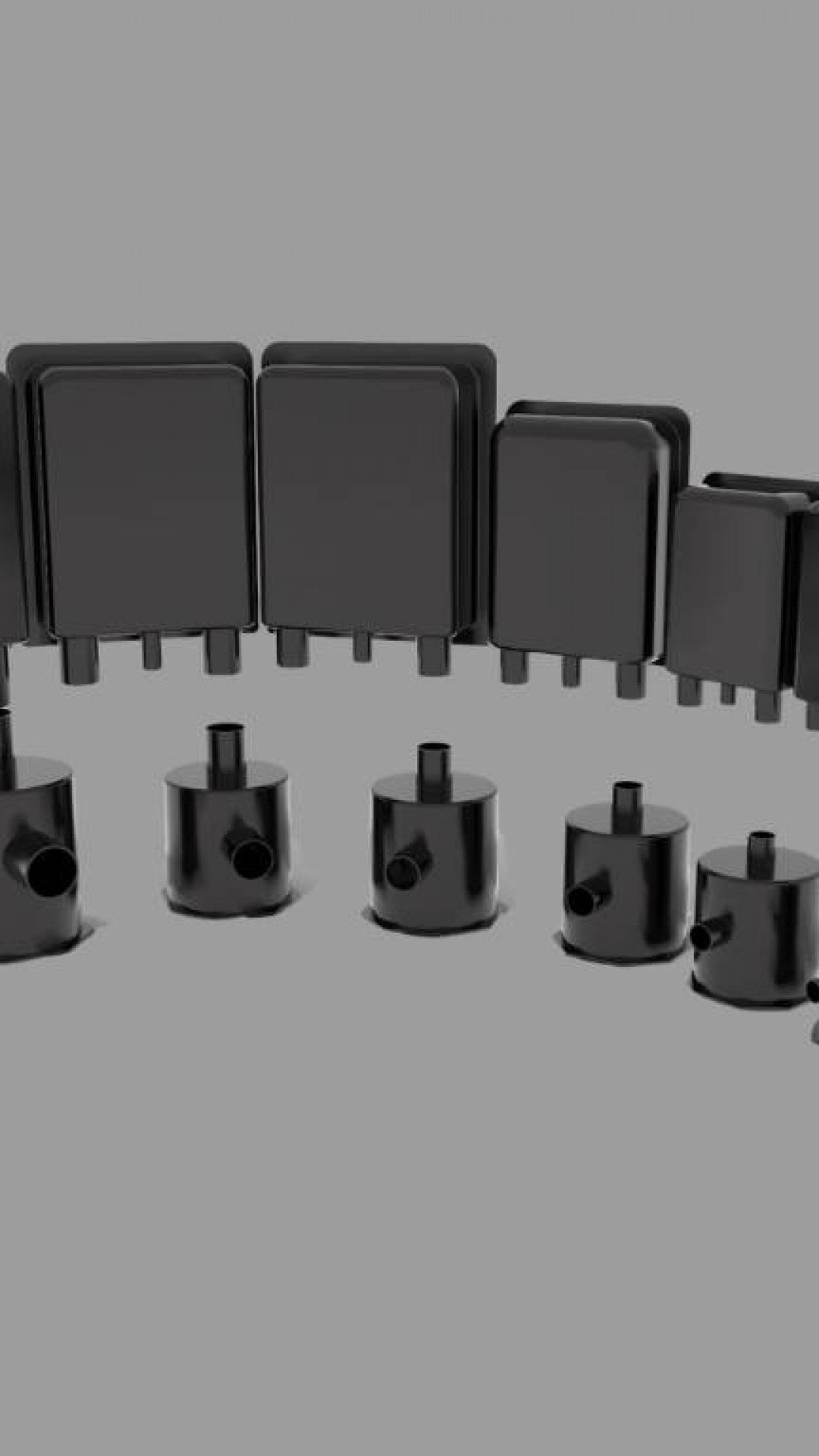
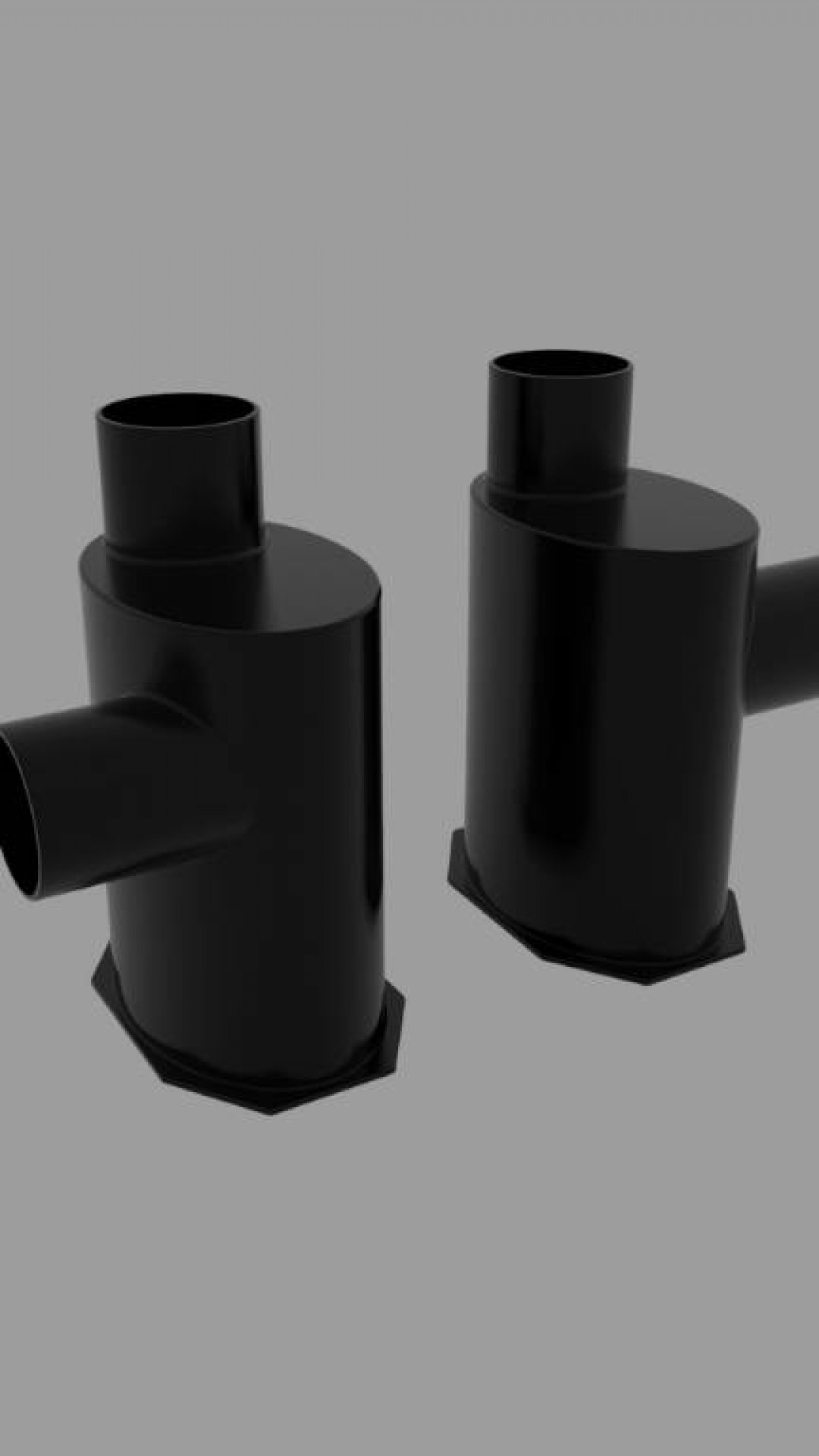
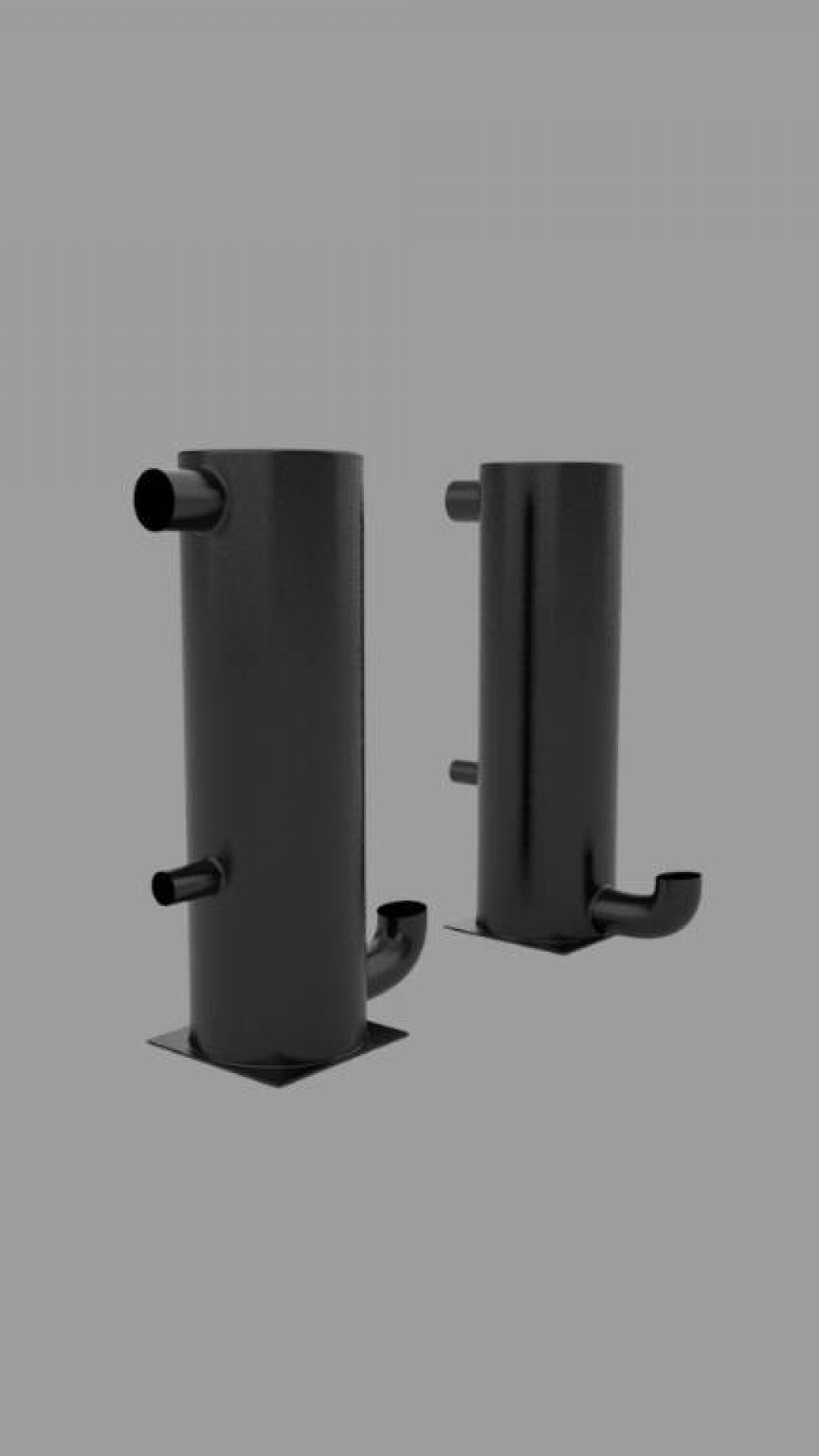
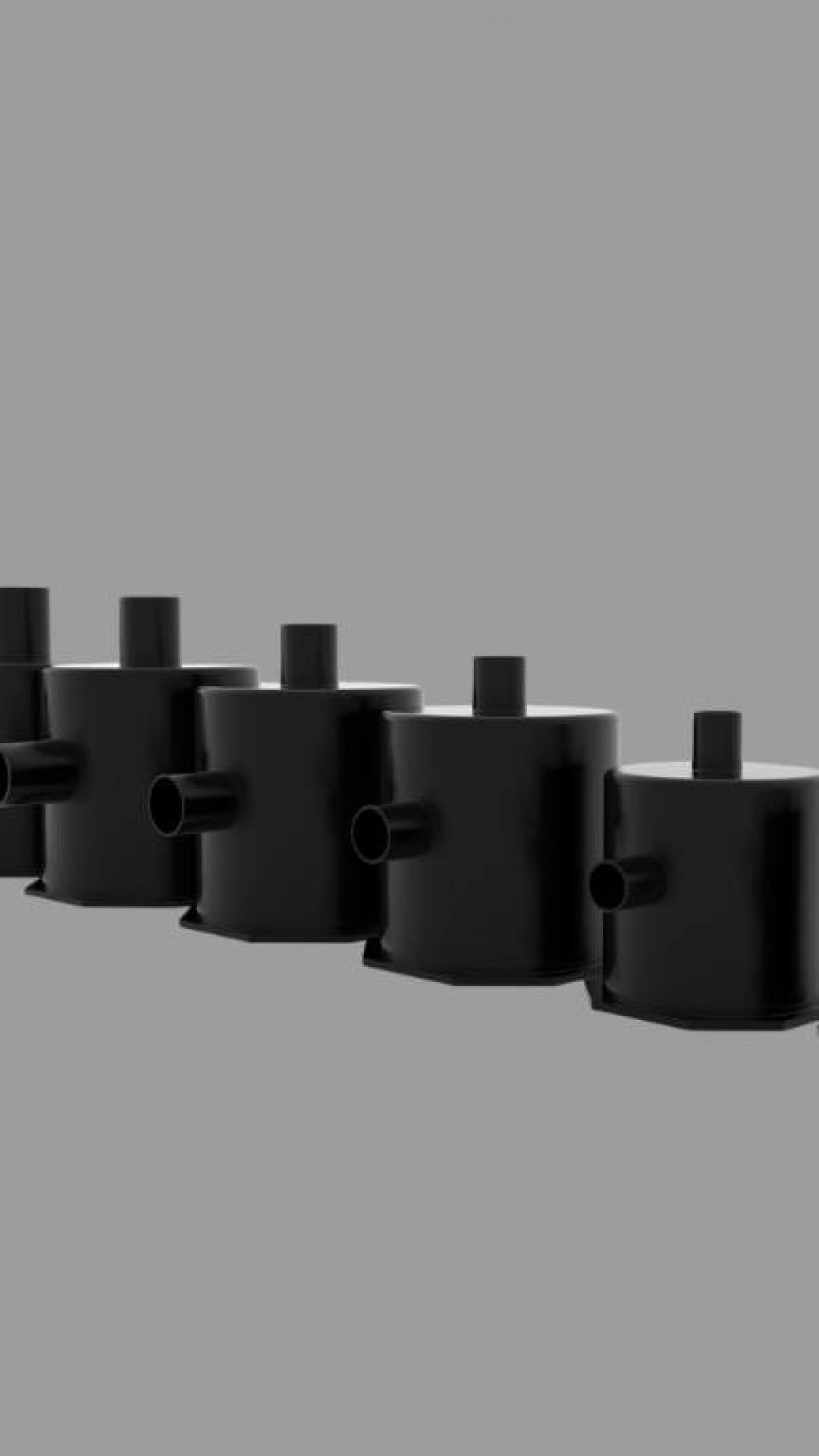
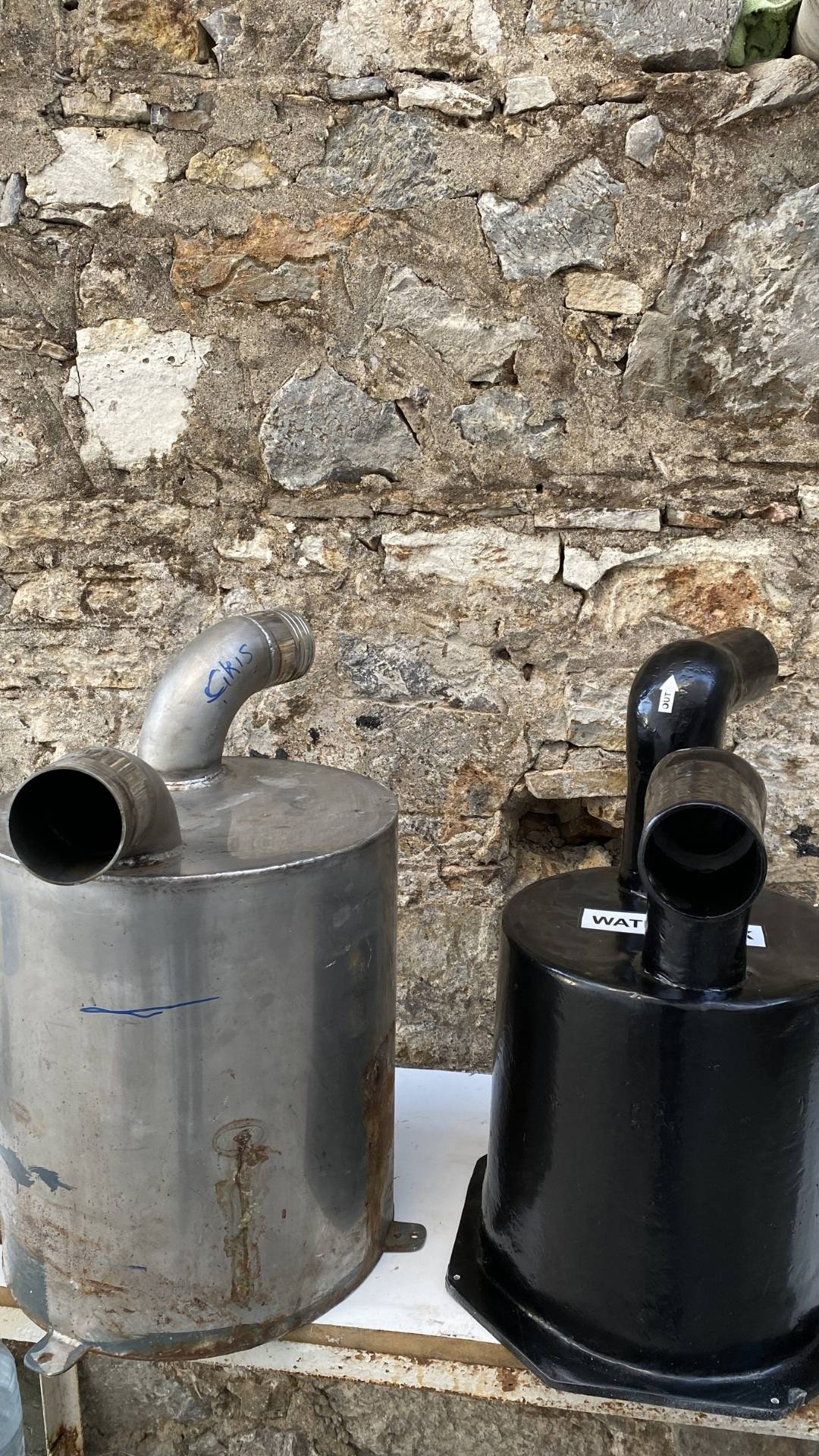
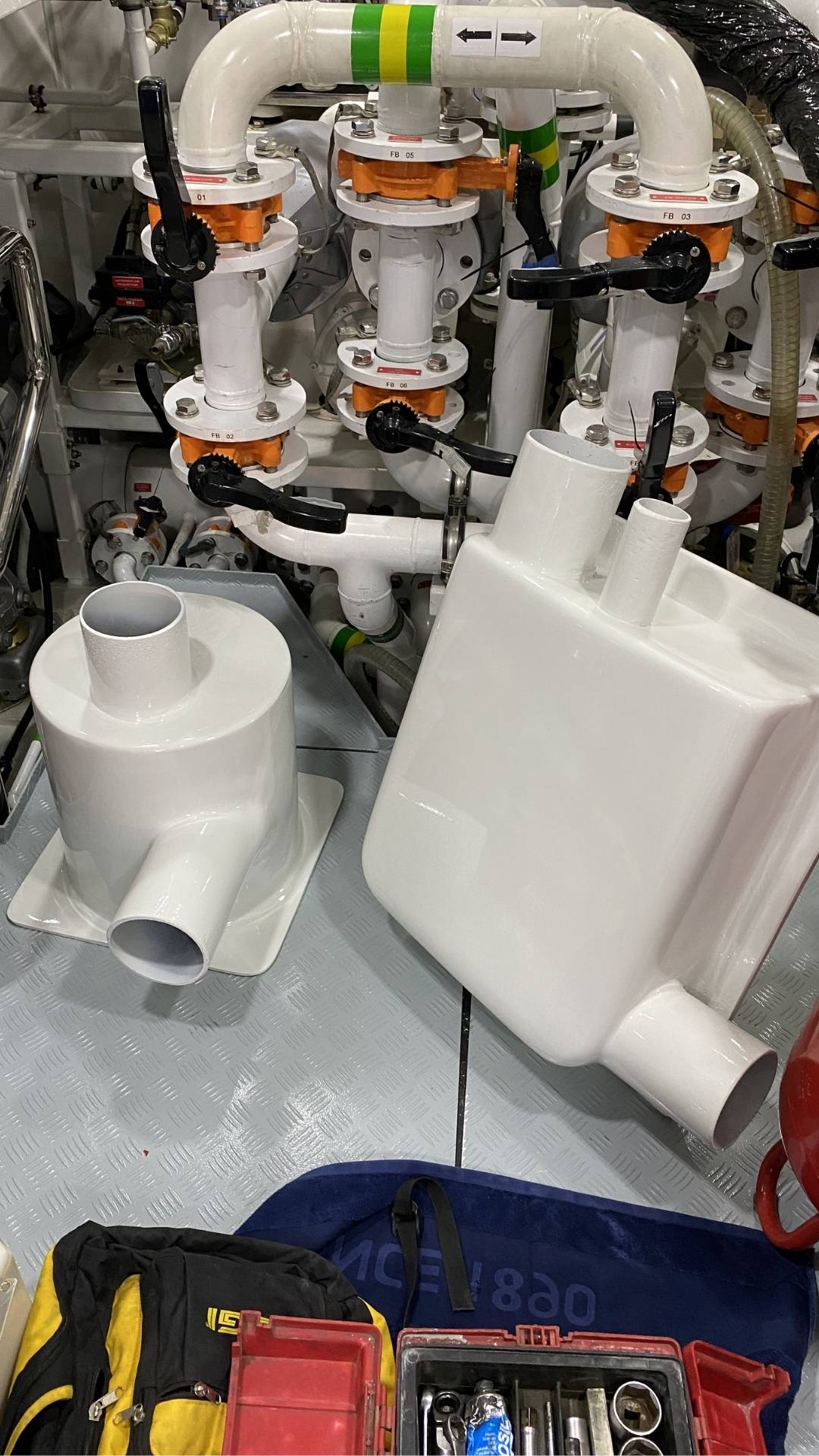
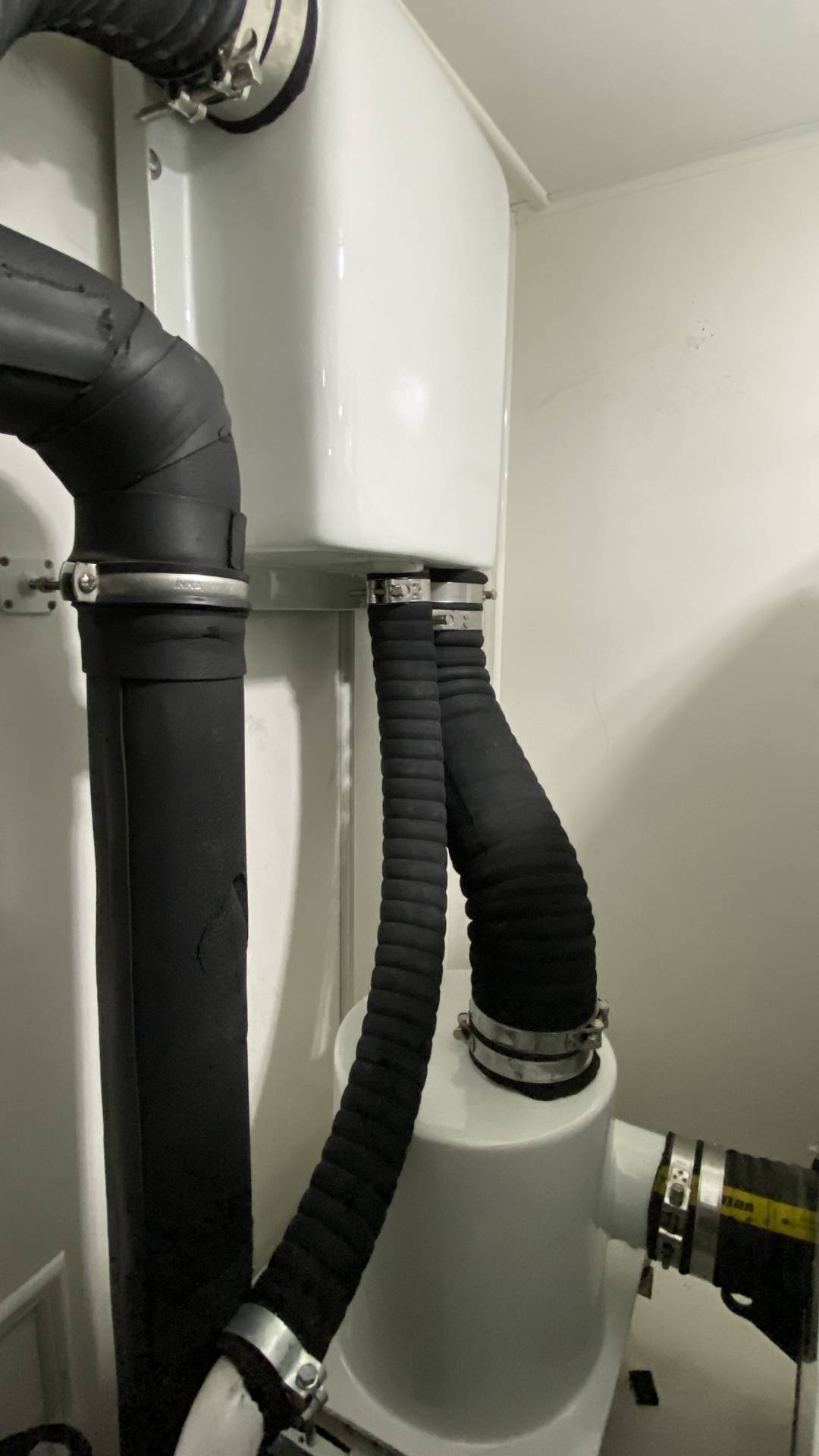
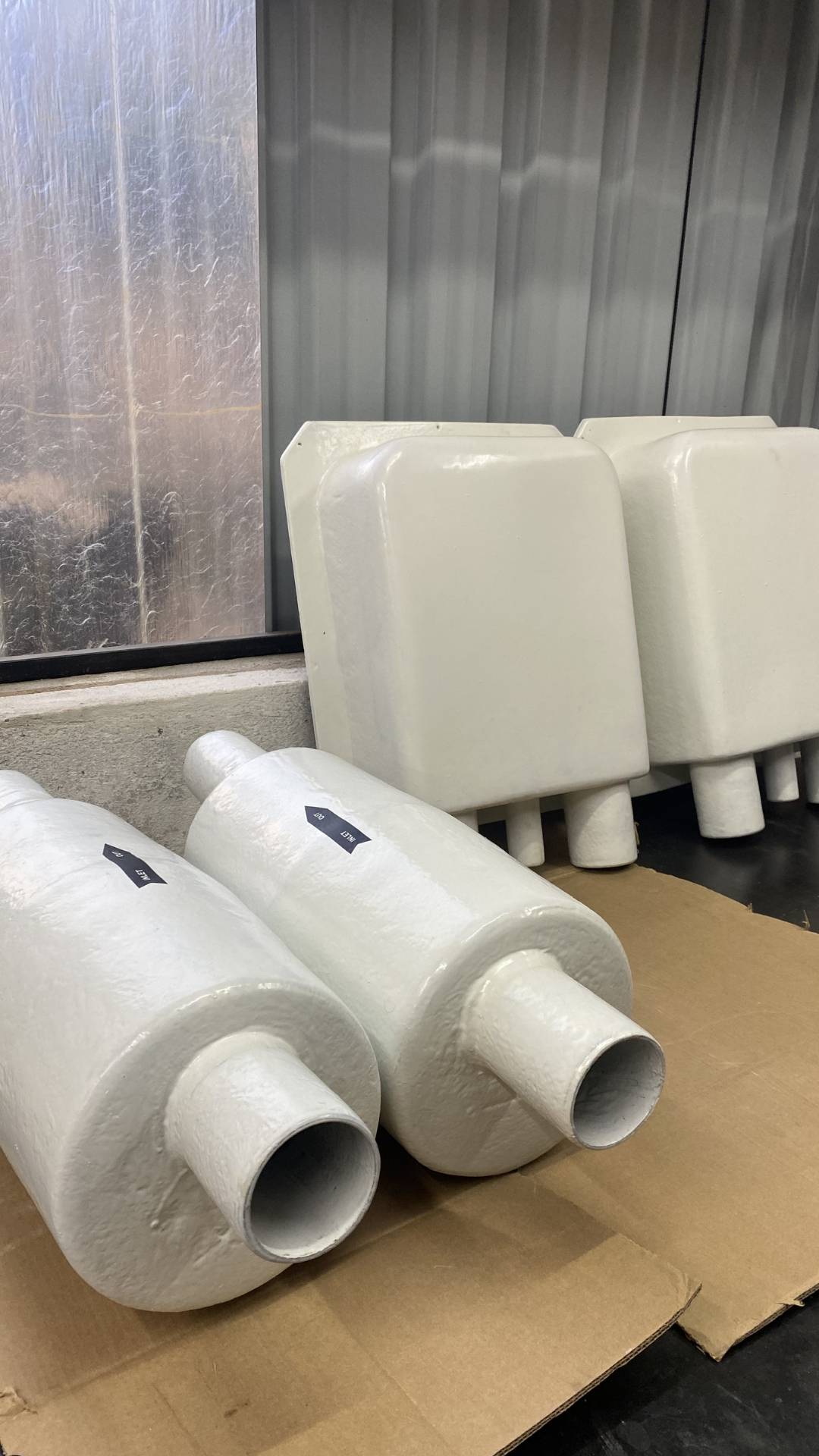
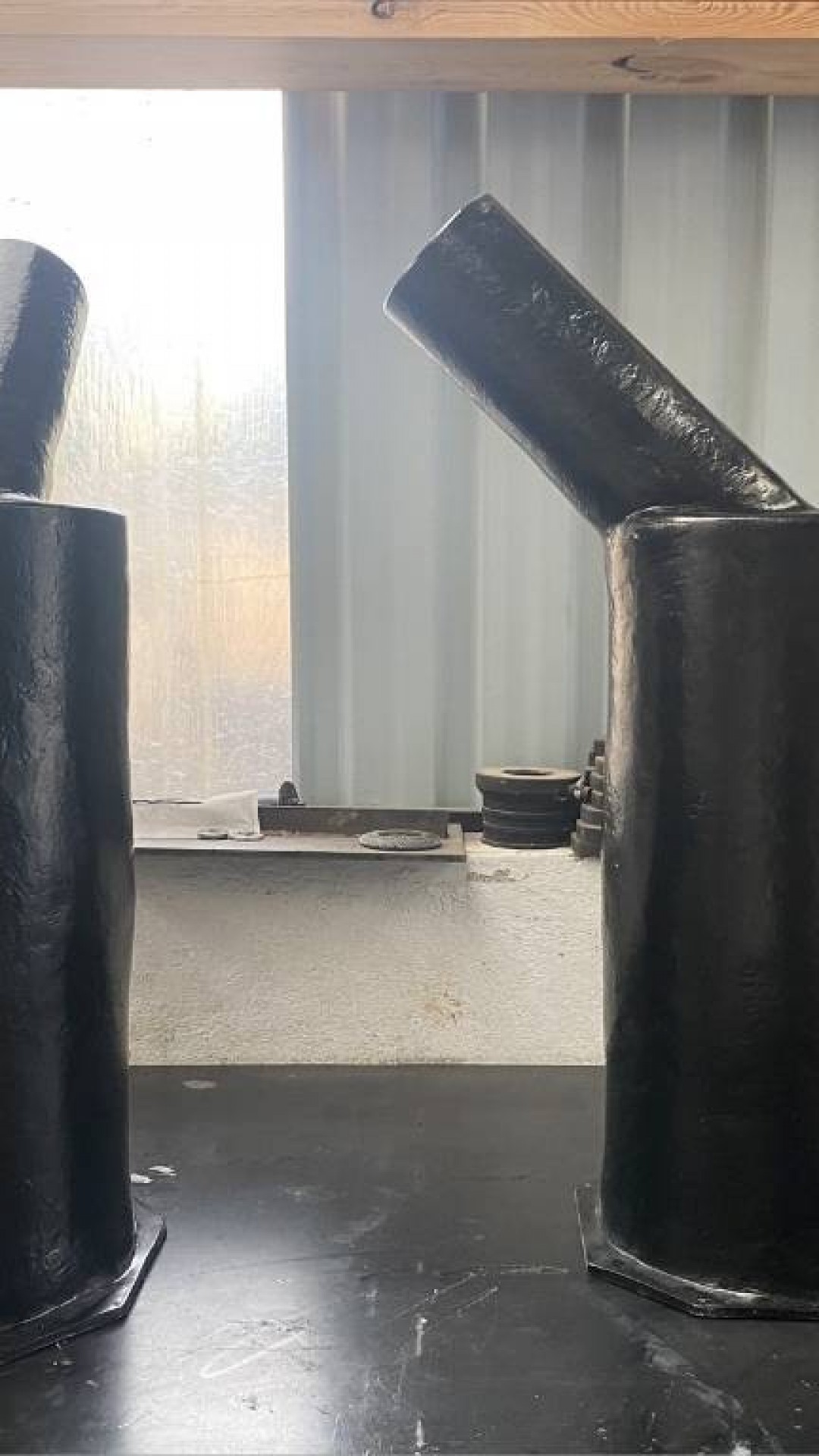
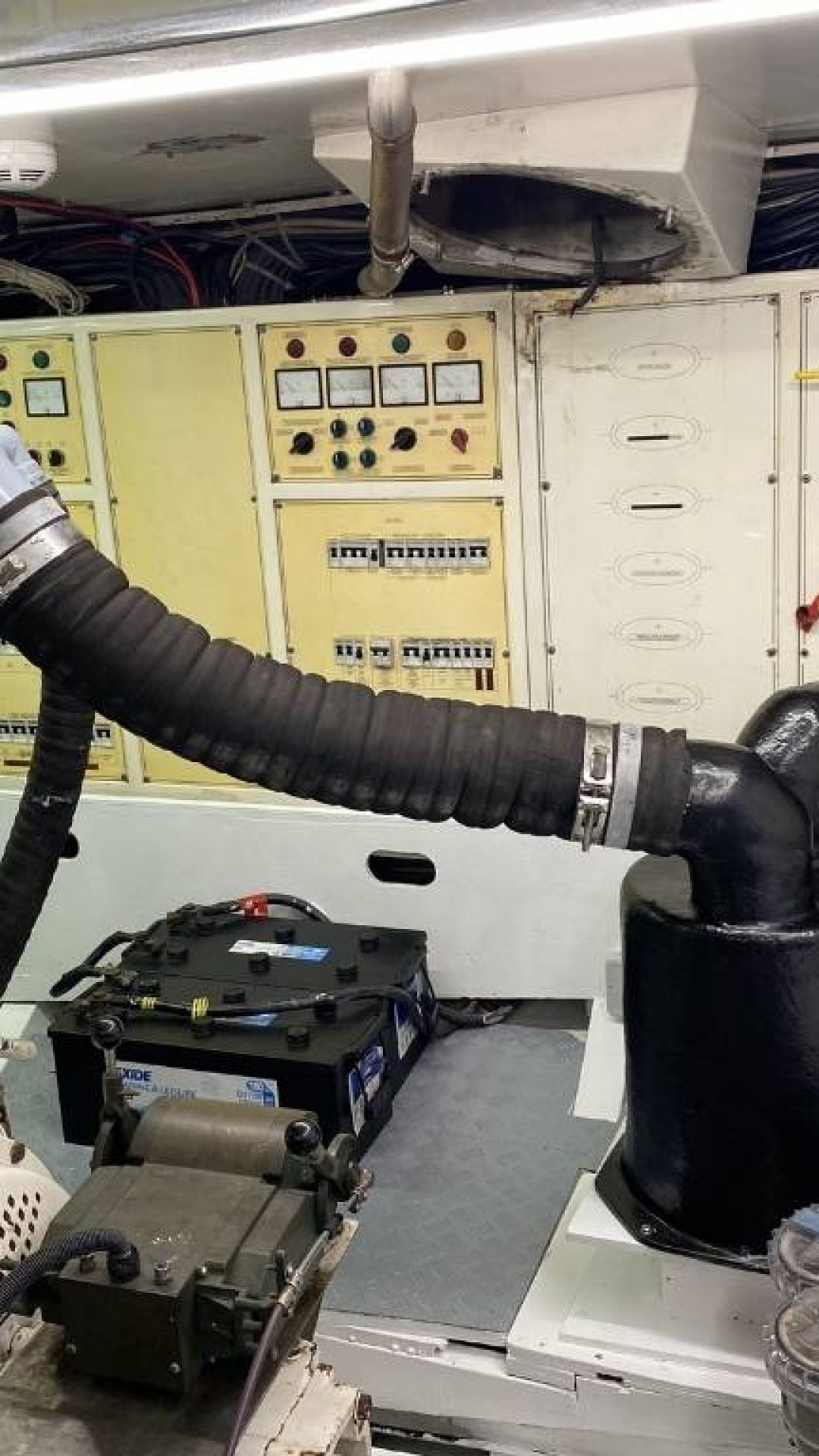
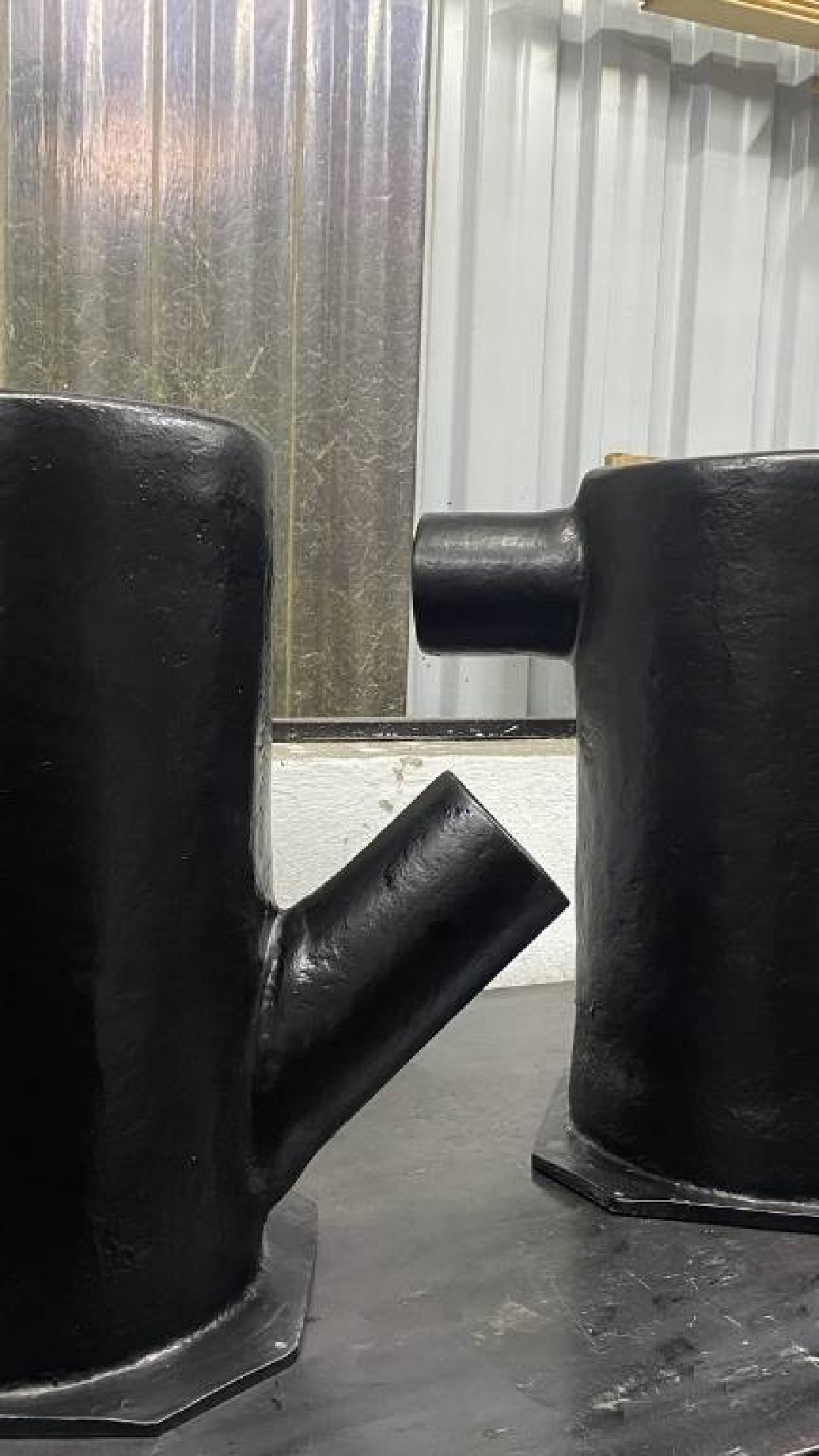
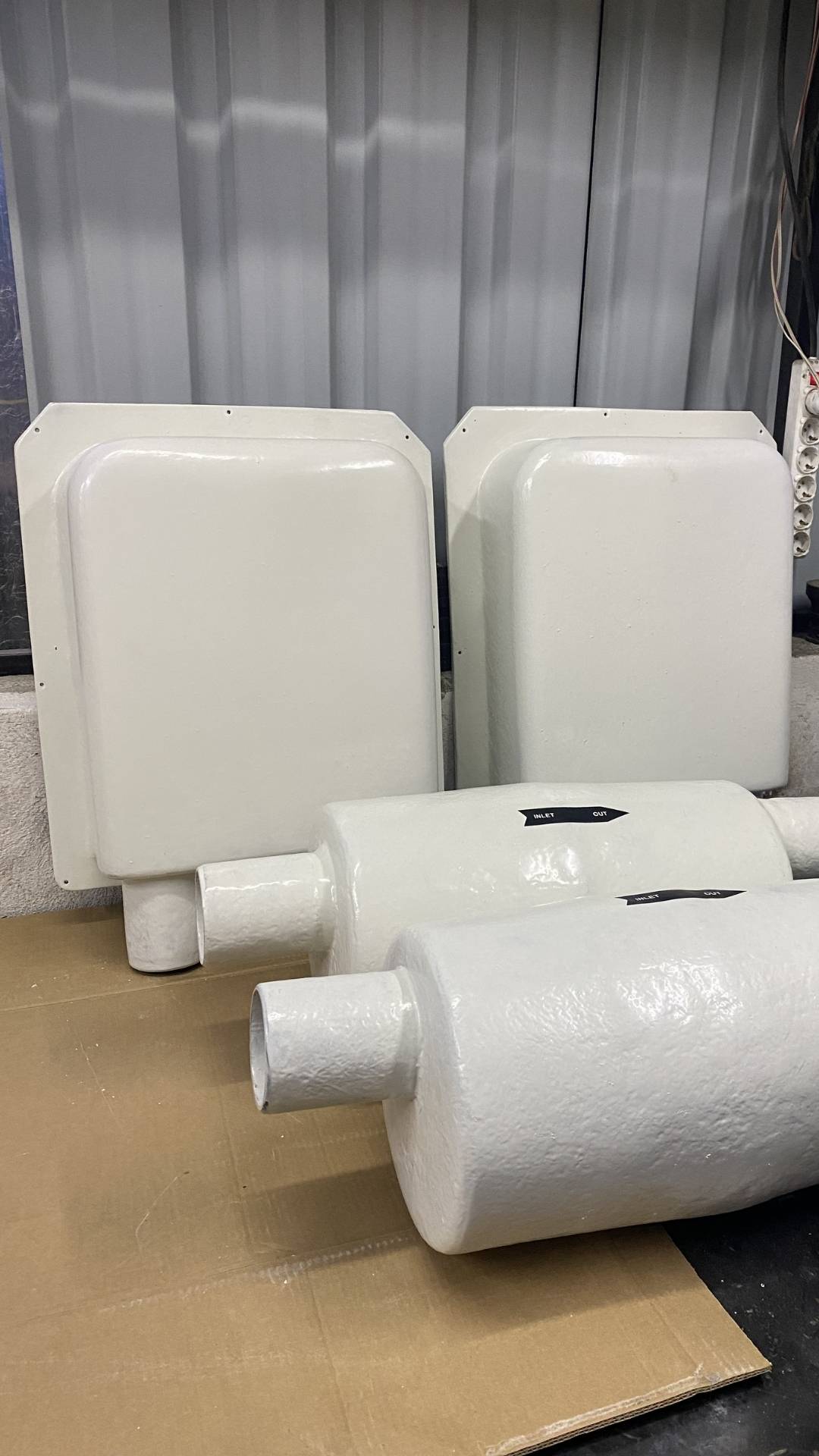
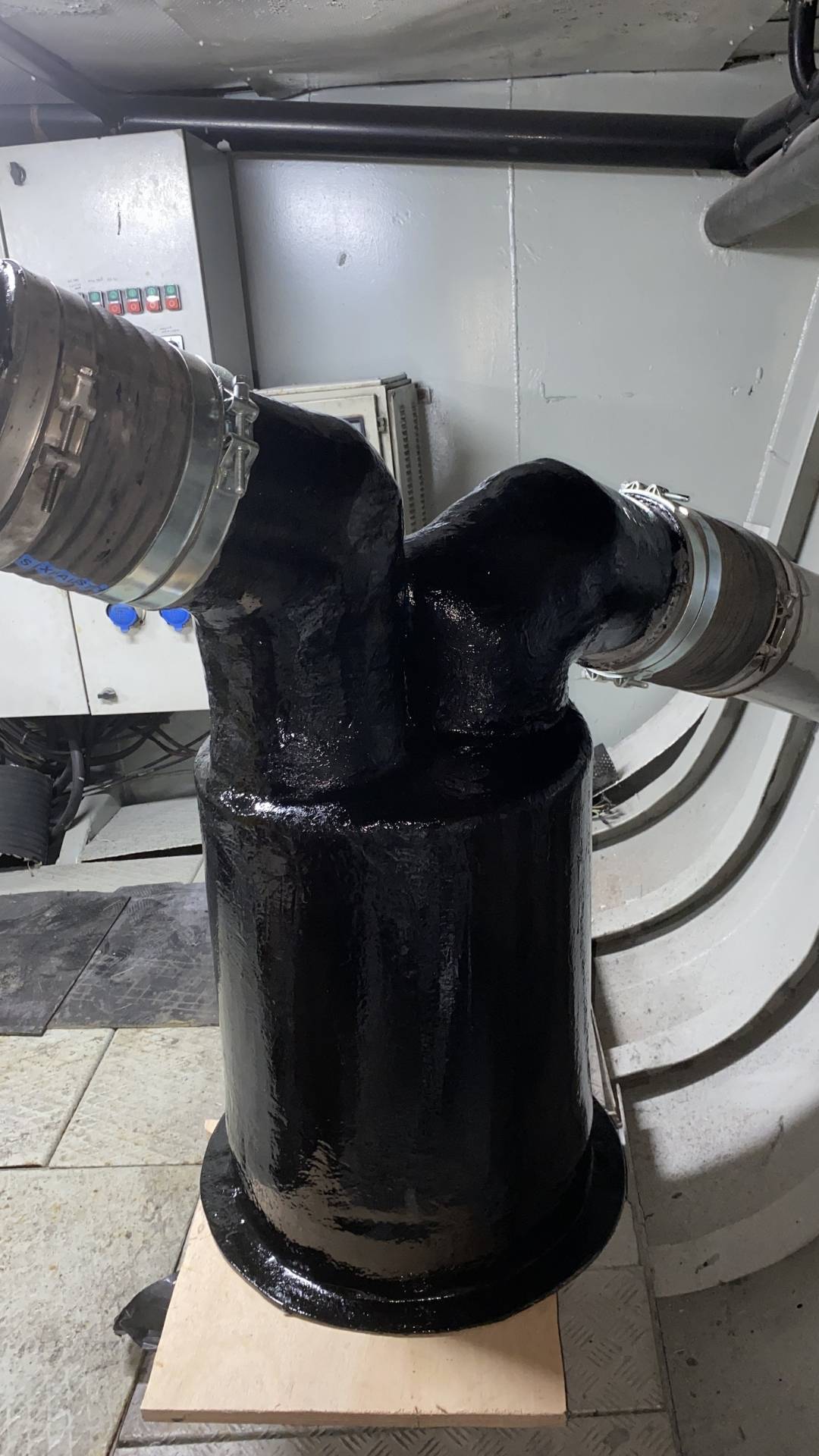
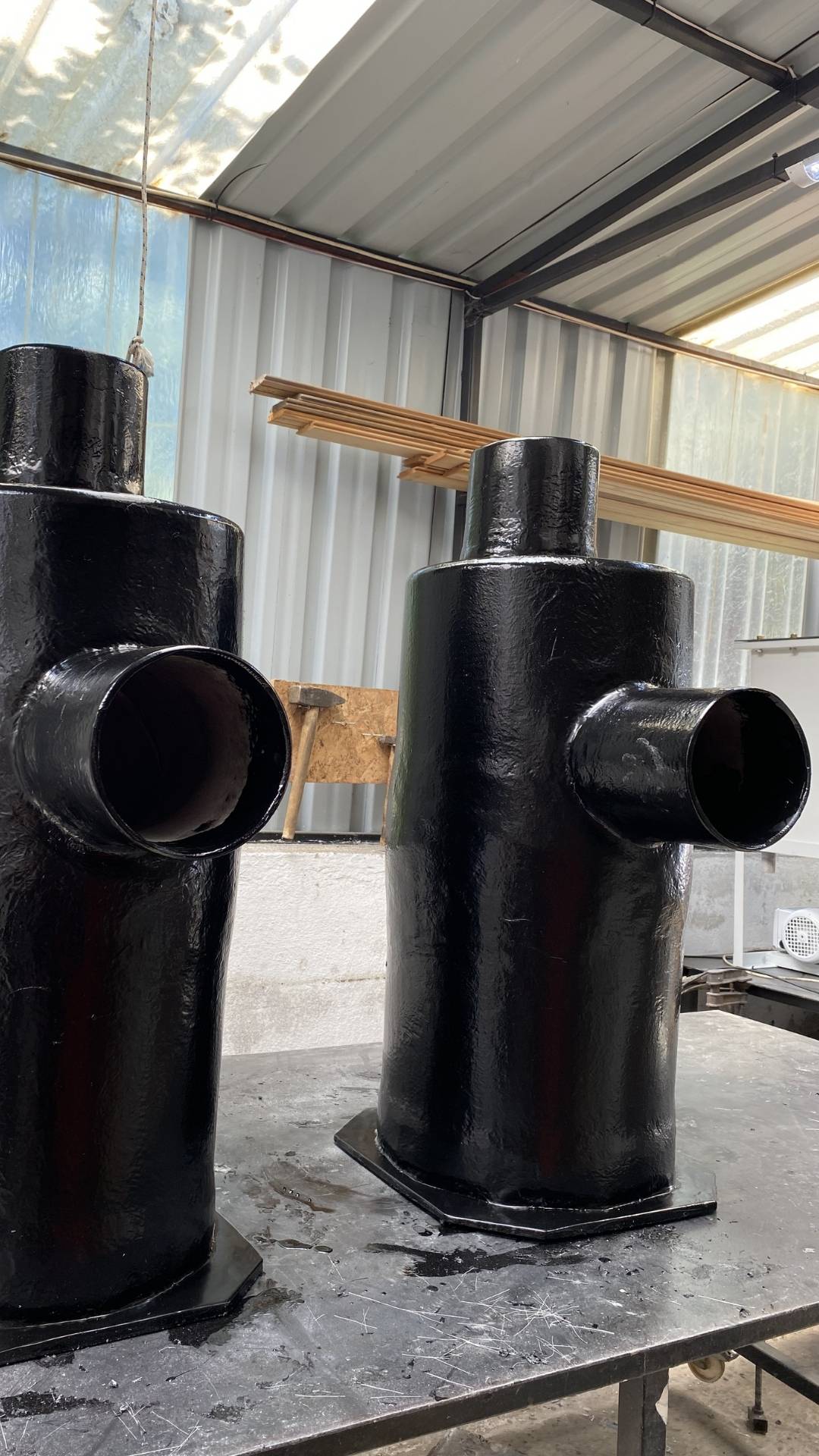
In yachts and boats, water-cooled exhaust (wet exhaust) systems provide lower surface temperatures and quieter operation by cooling exhaust gases with water. However, the key point of safety in these systems is the proper control of the water mixed into the exhaust line. While the waterlock holds the water in a safe volume, the gas-water separator systematically separates exhaust gas and water to support controlled water discharge. When these two functions are combined in a single system and properly designed, they help reduce the risk of water backflow, improve system stability, and provide a more organized engine room infrastructure. ECS Marin designs and commissions combined waterlock & gas-water separator production and installation according to the boat or yacht configuration, applying proper on-site installation discipline.
What Is a Combined System? Why Is It Preferred?
A combined waterlock & gas-water separator manages water in the wet exhaust line through both “retention and pulse discharge” and “separation and controlled routing” principles. It is preferred for the following reasons:
Strengthening water control in the wet exhaust line through a single system configuration
Helping reduce the risks of water backflow and siphoning effects
Providing a more compact, organized, and service-friendly layout in the engine room
Contributing to lower noise levels and more stable operation in certain configurations
Why Must the Combined Waterlock & Gas-Water Separator Be Properly Designed?
Water Management and Engine Protection
If volume, internal geometry, and layout are not properly designed, the risk of water accumulation and backflow may increase. The ECS Marin approach is to strengthen engine protection by keeping water in a safe zone and discharging it in a controlled manner.
Backpressure Control
The internal flow routing and connection diameters of the combined system affect the backpressure values to which the engine is exposed. The design objective is to improve safety while keeping system resistance within levels suitable for engine limits.
Sealing, Durability, and Ease of Service
Water or exhaust leakage in the engine room is a critical risk. Marine-grade materials, quality manufacturing, and proper installation ensure long service life. Removable connections and service accessibility speed up maintenance processes.
Scope of ECS Marin Service
ECS Marin handles the combined system end-to-end according to the boat or yacht configuration:
Custom combined system manufacturing for new-build projects
Renewal or improvement of existing lines during refit and overhaul processes
Proper sizing and connection design for engine and generator wet exhaust lines
Planning of water injection, riser/drop sections, and discharge configuration
System layout compatible with anti-siphon and related safety components
On-site installation, fixing, vibration management, and sealing checks
Post-commissioning evaluation of overall system behavior and stability
How Does Our Process Work?
Inspection and Configuration Analysis
In existing systems, the water injection point, line geometry, riser and drop sections, possible siphoning risks, and previous issues such as backflow, leakage, excessive noise, or performance fluctuation are examined. In new projects, engine or generator data and layout plans are taken as the basis.
Design: Volume, Internal Geometry, and Connection Diameters
The performance of the combined system is determined by the correct volume, correct internal flow, and correct connection diameters. ECS Marin establishes a system-wide balance between safe water management and backpressure levels suitable for engine limits.
Marine-Grade Manufacturing and Material Selection
Materials and manufacturing methods are selected to withstand the effects of salt water, temperature, and vibration. Sealing performance, strength, and long service life are the priorities.
Installation, Fixing, and Vibration Management
The combined system is installed in a way that ensures safe positioning, proper fixing, and preserved service access. Connection security, vibration behavior, and thermal expansion allowances are all taken into account.
Inspection and Commissioning
After installation, leakage control, connection safety, and system stability are evaluated. The goal is safe commissioning and predictable operating characteristics.
Benefits of the Combined System
Reduced risk of water backflow in the wet exhaust line
Better engine protection and lower risk of failure
More stable backpressure and safer system behavior
A more compact, organized, and service-friendly engine room layout
Lower leakage risk and easier maintenance
Why ECS Marin?
ECS Marin approaches the combined waterlock & gas-water separator application not as a single piece of equipment, but as a central part of the safety architecture of the wet exhaust system. With proper sizing, marine-grade production, and disciplined on-site installation, ECS Marin delivers long-lasting and reliable solutions for yachts and boats.