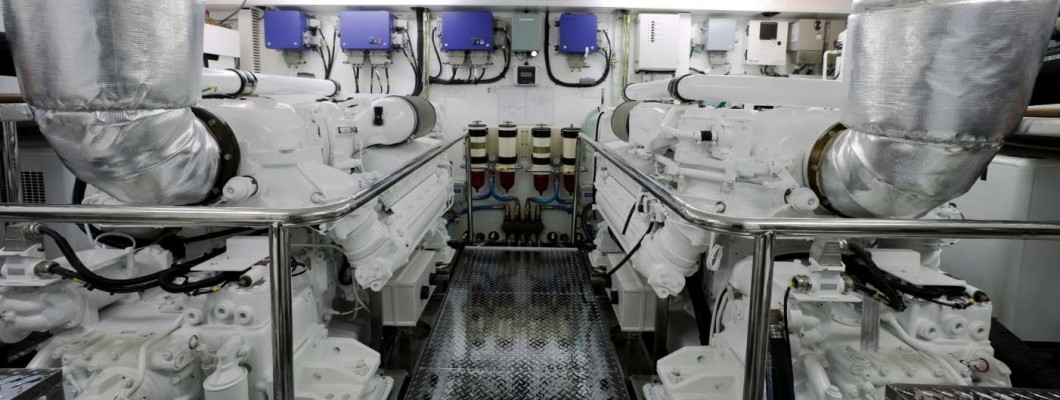
Safe and efficient marine operation is not achieved by engine power alone. Propulsion components (shaft and propeller), exhaust infrastructure, wet-exhaust water management, and disciplined preventive maintenance must work together—especially under harsh marine conditions such as vibration, corrosion, thermal loads and long operating hours. Choosing the right service at the right time is the most effective way to prevent failures before they happen.
ECS Marin combines field experience with engineering measurement and verification to reduce failure risk, protect efficiency and extend equipment life.
1) Shaft & Propeller Overhaul: The Foundation of the Propulsion Line
Shafts and propellers operate within tight tolerances while transferring power into thrust. Minor runout, surface damage or poor fitting can lead to vibration, bearing wear, sealing issues and performance losses.
Common warning signs
-
Increased vibration/noise at specific RPM ranges
-
Reduced acceleration or unstable cruising behavior
-
Heat or leakage around bearings and seals
ECS Marin’s overhaul approach integrates measurement, inspection, corrective restoration and installation discipline to bring the propulsion line back to a reliable condition.
2) Propeller Dynamic Balancing: Smoother Cruising, Lower Mechanical Stress
Small propeller imbalances can amplify at higher RPM and transmit vibration into the hull. Beyond comfort, vibration increases stress on bearings, seals, couplings and fasteners.
Key benefits
-
Reduced vibration and noise
-
Longer service life for shaft line bearings and seals
-
More stable performance and potential fuel efficiency improvement
3) NDT Crack Testing: Detecting Invisible Risks Early
Metal components in marine environments may develop micro-cracks due to load, vibration and corrosion. If not detected early, these issues can lead to unexpected downtime and safety concerns.
ECS Marin selects appropriate NDT methods (PT / MT-MPI / UT) based on material and risk level, verifying critical zones through inspection—so decisions are made with measured confidence, not assumptions.
4) Exhaust Fabrication: Performance, Heat Control and Safety in One Line
The exhaust line is not “just piping.” It impacts engine backpressure, engine room heat, sealing reliability and fire risk.
Why correct exhaust fabrication matters
-
Backpressure management within engine limits
-
Better engine room temperature control
-
Corrosion resistance and long service life
-
Reduced leak and fire risk
5) Exhaust Insulation Jackets: Heat and Risk Control in the Engine Room
High surface temperatures around exhaust lines, turbos and manifolds affect personnel safety and shorten the life of nearby equipment. Custom-fit, removable insulation jackets reduce radiant heat, improve service comfort and enhance safety.
6) Waterlock, Gas-Water Separator and Combined Systems: Water Management for Wet Exhaust
In wet exhaust systems, the critical factor is controlling water mixed into the exhaust stream. Incorrect layouts can increase backflow and siphon-effect risks.
ECS Marin solutions
-
Waterlock fabrication & installation: Helps hold water in a safe volume and discharge it in a controlled way.
-
Gas-water separator: Separates exhaust gas and water to support controlled routing and discharge.
-
Combined waterlock & separator: Offers compact layout and stronger integrated water management.
The goal is always: safety + stable backpressure + leak-tight installation discipline.
7) Generator Exhaust Soot Filtration: Cleaner Engine Rooms, More Predictable Upkeep
Under heavy use, diesel generator exhaust can create soot and particulate buildup. Filtration helps reduce soot load, but the engineering priority is backpressure control. ECS Marin designs and integrates solutions by considering generator limits and exhaust geometry.
8) Main Engine & Generator Maintenance and Repair: Uptime and Safety Through Planning
Main engines and generators are at the core of marine uptime. Planned maintenance preserves efficiency, reduces unexpected failures and extends component life.
Typical service indicators
-
Overheating, smoke/soot, odor
-
Increasing vibration and performance loss
-
Generator voltage/frequency instability
ECS Marin delivers diagnosis, preventive maintenance, correct repairs and commissioning/testing as a complete workflow.
Right Service, Right Time, Safer Operation
Propulsion, exhaust systems and maintenance are interconnected. A small issue in one area can escalate into major failures elsewhere. ECS Marin’s system-level approach brings measurement, verification, fabrication and installation discipline together—supporting safer, more efficient marine operation for yachts, boats and ships.
Leave a Comment